Is German Hard to Learn for Indians? A Realistic Beginner’s Guide
Introduction
German often carries a reputation for being “very difficult,” especially among Indian learners. Many students hesitate before starting because they assume grammar, pronunciation, and vocabulary will be overwhelming.
But is German genuinely hard for Indians — or just misunderstood?
This guide breaks down the reality, challenges, advantages, and practical expectations for Indian learners.
Why German Seems Difficult at First
1. German Grammar Feels Strict
German grammar introduces concepts that may seem unfamiliar:
-
Noun genders (der, die, das)
-
Cases (nominative, accusative, dative, genitive)
-
Verb placement rules
Example:
-
English: I am going today
-
German: Heute gehe ich
At first glance, this looks confusing.
Reality: German grammar is rule-driven and predictable.
2. Word Order Differences
German sentence structure often shifts verbs:
-
Main clause → Verb in position 2
-
Subordinate clause → Verb at the end
This requires adjustment, not intelligence.
3. Long Compound Words
German combines words:
-
Krankenhaus (hospital)
-
Lebensmittelgeschäft (grocery store)
They look intimidating but follow logic.
Why German is Actually Manageable for Indians
✅ Consistent Pronunciation
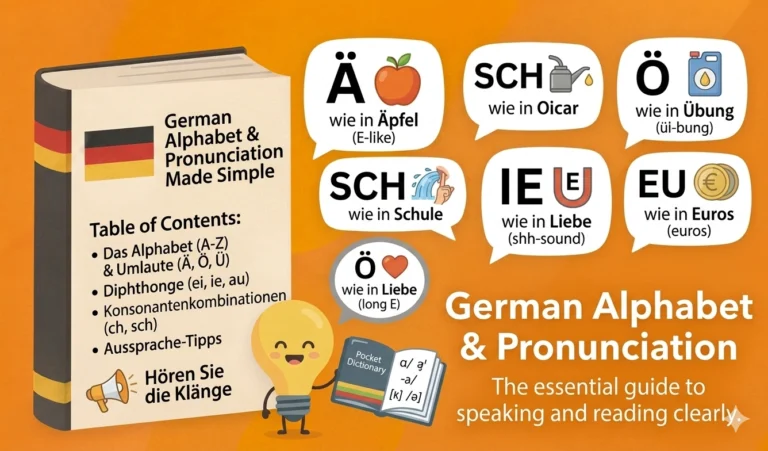
German pronunciation is far more stable than English.
Unlike English spelling chaos:
-
Though / Tough / Through
German letters behave predictably.
This benefits Indian learners familiar with phonetic languages.
✅ Indians Already Understand Grammar Complexity
Many Indian languages use:
-
Gender distinctions
-
Case systems
-
Inflections
German concepts are not foreign — just new.
✅ Faster Vocabulary Recognition
German shares similarities with English:
-
Haus → House
-
Wasser → Water
-
Hand → Hand
Vocabulary builds faster than expected.
Common Challenges Indian Learners Face
1. Fear of Grammar
Many learners assume:
“German grammar is too hard”
But grammar becomes easier through exposure, not memorisation.
2. Lack of Speaking Practice
A common mistake:
❌ Studying theory only
❌ Avoiding conversations
❌ Waiting to be “perfect”
German improves through active use.
3. Unrealistic Expectations
Language learning is gradual:
-
German is not mastered in weeks
-
Progress depends on consistency
How Hard is German Compared to English?
German is:
✔ Harder initially
✔ Easier long-term
✔ More logical
✔ Less irregular
Many learners find German structured once patterns click.
How Long Does It Take to Learn German?
Approximate timelines:
-
A1 Level: 2–3 months
-
A2 Level: 4–6 months
-
B1 Level: 8–12 months
Aligned with standards from Goethe-Institut.
Is German Worth Learning for Indians?
German opens opportunities in:
-
Education
-
Employment
-
Migration
-
International careers
Especially for those considering Germany, Austria, or Switzerland.
Tips to Make German Easier
✅ Focus on Patterns, Not Rules
Grammar becomes intuitive through examples.
✅ Speak Early (Even with Mistakes)
Confidence develops through imperfect attempts.
✅ Daily Micro-Practice
Consistency beats intensity:
-
20 minutes daily > 3 hours once a week
✅ Build Listening Skills
German clarity improves with exposure.
Final Verdict: Is German Hard for Indians?
German is not hard — it is structured and systematic.
Difficulty usually comes from:
❌ Learning approach
❌ Fear of mistakes
❌ Inconsistent practice
With the right strategy, German becomes predictable and manageable.
Conclusion
German may look intimidating at first, but Indian learners often adapt quickly due to familiarity with grammar-rich languages.
The real success factor is not difficulty — but discipline and consistency.