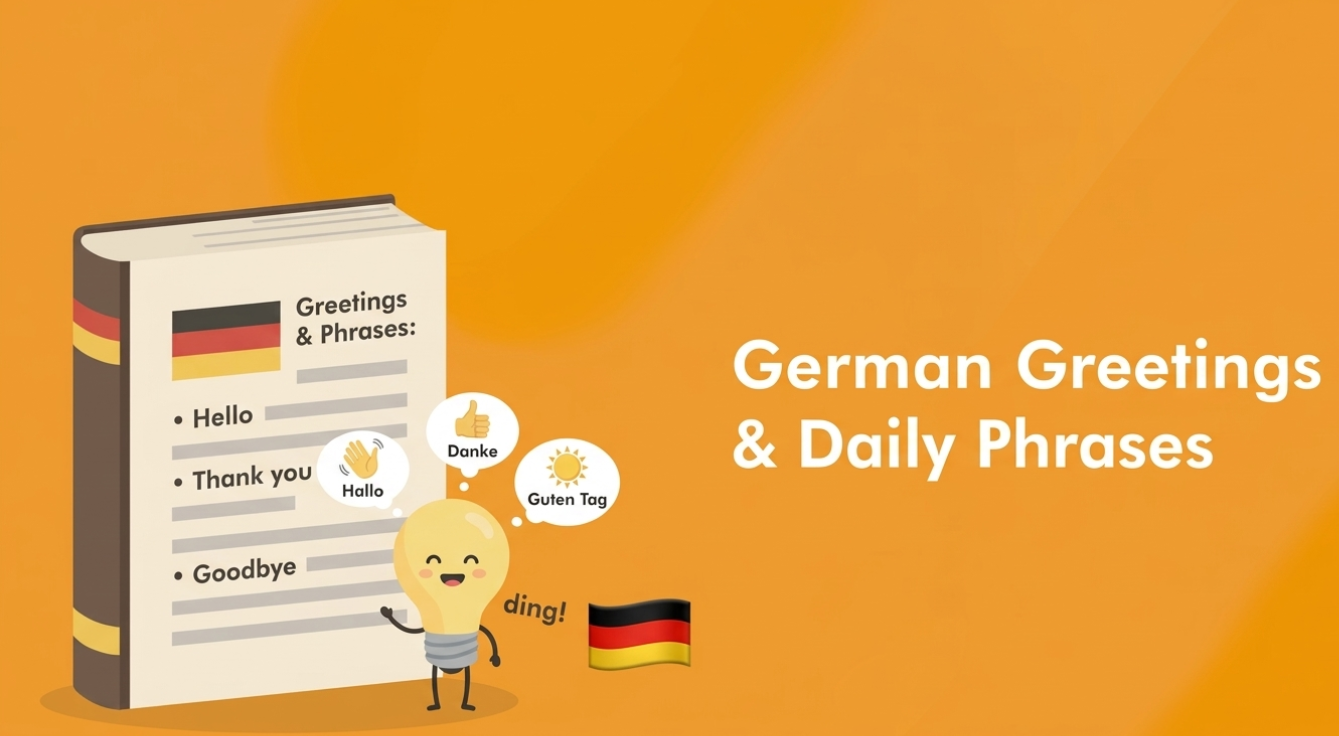
German Greetings & Daily Phrases – Complete Beginner Guide
Learning German greetings and daily phrases is the first step to speaking the language confidently. Whether you are planning to travel to Germany, preparing for exams, or starting a German language course, knowing common phrases helps you communicate in real-life situations.
This guide explains the most useful German greetings, polite expressions, and everyday sentences that beginners should learn first.
1. Common German Greetings
German greetings change depending on the time of day and the level of formality.
✔ Basic Greetings
| German | English Meaning | Usage |
|---|---|---|
| Hallo | Hello | Informal, common |
| Hi | Hi | Very informal |
| Guten Morgen | Good morning | Morning greeting |
| Guten Tag | Good day / Hello | Formal / daytime |
| Guten Abend | Good evening | Evening |
| Gute Nacht | Good night | Before sleeping |
Tip:
Use Guten Tag in formal situations like in the office, at school, or when meeting someone for the first time.
This basic German greetings guide explains complete German greetings for beginners and helps learners understand common German greetings easily.
2. Informal vs Formal Greetings
German language has two speaking styles:
- Informal → friends, family, young people
- Formal → strangers, teachers, office, elders
| English | Informal | Formal |
|---|---|---|
| How are you? | Wie geht’s? | Wie geht es Ihnen? |
| I am fine | Mir geht’s gut | Mir geht es gut |
| Nice to meet you | Freut mich | Freut mich, Sie kennenzulernen |
Learning formal phrases is very important in German culture.
3. Daily Conversation Phrases
These phrases are used in everyday communication.
| German | English |
|---|---|
| Bitte | Please / You’re welcome |
| Danke | Thank you |
| Vielen Dank | Thank you very much |
| Entschuldigung | Excuse me / Sorry |
| Ja | Yes |
| Nein | No |
| Vielleicht | Maybe |
| Natürlich | Of course |
Example:
- Danke schön → Thank you very much
- Bitte schön → You’re welcome
4. Asking Basic Questions in German
These phrases help in daily conversations.
| German | English |
|---|---|
| Wie heißt du? | What is your name? |
| Ich heiße… | My name is… |
| Woher kommst du? | Where are you from? |
| Ich komme aus… | I come from… |
| Sprechen Sie Englisch? | Do you speak English? |
| Ich verstehe nicht | I don’t understand |
These phrases are very useful for beginners.
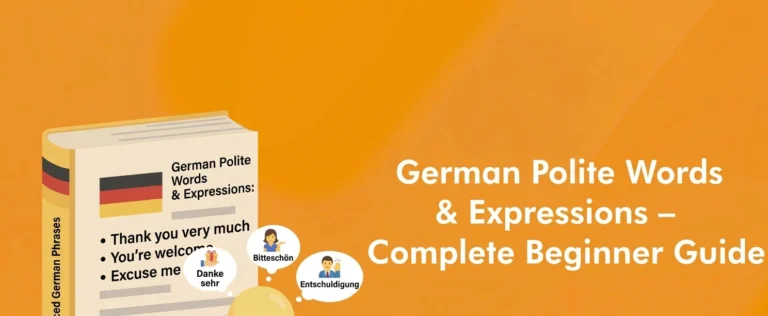
5. Polite Expressions in German
Politeness is very important in German-speaking countries.
| German | English |
|---|---|
| Bitte | Please |
| Danke schön | Thank you |
| Entschuldigen Sie | Excuse me (formal) |
| Tut mir leid | Sorry |
| Kein Problem | No problem |
| Willkommen | Welcome |
Using polite words makes your German sound natural.
Read : Guide for german polite words expressions
6. Goodbye Phrases in German
Just like greetings, German has different ways to say goodbye.
| German | English |
|---|---|
| Tschüss | Bye |
| Auf Wiedersehen | Goodbye (formal) |
| Bis bald | See you soon |
| Bis morgen | See you tomorrow |
| Gute Nacht | Good night |
Example:
- Bis später → See you later
- Bis dann → See you then
7. Tips to Learn German Greetings Fast
✔ Practice daily
✔ Use flashcards
✔ Watch German videos
✔ Speak with friends
✔ Learn formal + informal forms
Start with greetings first, then move to sentences.
Conclusion
Learning German greetings and daily phrases helps beginners start speaking quickly. Simple words like Hallo, Danke, Bitte, Guten Tag, Tschüss are used every day in German conversations.
Once you master these phrases, you can easily move to topics like:
- German sentence structure
- German grammar basics
- German vocabulary
- German conversation practice
German becomes easy when you practice small phrases every day.