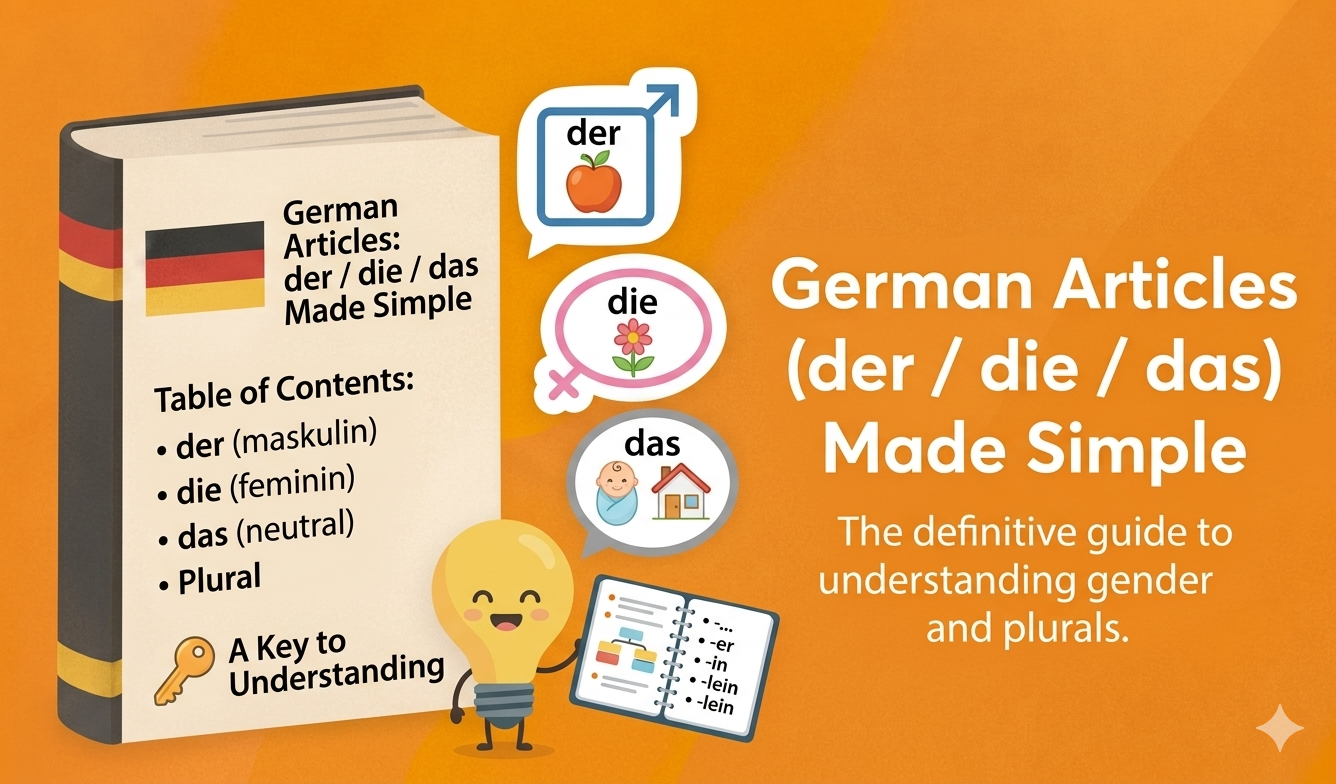
German Articles (der / die / das) Made Simple
Learning German articles—der, die, das—is one of the biggest challenges for beginners. Unlike English, German assigns a gender to every noun, and this affects not just articles, but also adjectives and sentence structure.
This guide simplifies everything. By the end, you’ll understand how German articles work, patterns to recognize, and practical tricks to remember them faster.
What Are German Articles?
German articles are words like “the” (definite) and “a/an” (indefinite) that come before nouns.
Definite Articles (The)
- der → masculine
- die → feminine
- das → neuter
Examples:
- der Mann (the man)
- die Frau (the woman)
- das Kind (the child)
Indefinite Articles (A / An)
- ein → masculine & neuter
- eine → feminine
Examples:
- ein Mann (a man)
- eine Frau (a woman)
- ein Kind (a child)
Why German Articles Are Important
Articles are not optional in German—they affect:
- Sentence meaning
- Grammar cases (nominative, accusative, etc.)
- Adjective endings
Getting them wrong can confuse listeners or change meaning entirely.
Understanding Gender in German
Every noun in German has a gender:
- Masculine (der)
- Feminine (die)
- Neuter (das)
The Challenge:
There is no universal rule for gender—you often need to memorize it.
But don’t worry—patterns exist.
Smart Patterns to Learn Articles Faster
1. Masculine Nouns (der)
Often used for:
- Male people → der Vater (father)
- Days & months → der Montag
- Weather → der Regen
Common endings:
- -er → der Lehrer
- -en → der Garten
2. Feminine Nouns (die)
Often used for:
- Female people → die Mutter
- Numbers → die Eins
- Many abstract nouns
Common endings:
- -e → die Blume
- -ung → die Zeitung
- -heit / -keit → die Freiheit
- -schaft → die Mannschaft
3. Neuter Nouns (das)
Often used for:
- Young people → das Kind
- Languages → das Deutsch
- Infinitive verbs → das Essen
Common endings:
- -chen → das Mädchen
- -lein → das Fräulein
- -ment → das Instrument
The “Plural Trick” You Should Know
Good news:
👉 All plural nouns use “die”
Examples:
- die Männer (the men)
- die Frauen (the women)
- die Kinder (the children)
The Best Way to Memorize Articles
1. Learn Nouns WITH Articles
Don’t learn:
- ❌ Tisch
Learn:
- ✅ der Tisch
2. Use Color Coding
- Blue → der
- Red → die
- Green → das
This improves memory retention.
3. Use Flashcards & Spaced Repetition
Apps like Anki or Quizlet help reinforce gender patterns over time.
4. Group Words by Pattern
Example:
- die Nation
- die Information
- die Station
All follow the -ion = feminine rule
Common Mistakes to Avoid
❌ Guessing based on English
→ “Girl” is neuter in German: das Mädchen
❌ Ignoring the article
→ Always learn the noun + article together
❌ Overthinking rules
→ Patterns help, but memorization is still key
Quick Practice
Try identifying the correct article:
- ___ Apfel (apple)
- ___ Lampe (lamp)
- ___ Auto (car)
Answers:
- der Apfel
- die Lampe
- das Auto
Pro Tips to Master German Articles Faster
- Focus on high-frequency nouns first
- Practice daily with real sentences
- Read simple German texts (A1 level)
- Listen to German audio content
Final Thoughts
German articles may seem confusing at first, but they become easier with:
- Consistent practice
- Pattern recognition
- Smart memorization techniques
Instead of trying to “figure out” gender every time, train your brain to recognize and recall automatically.