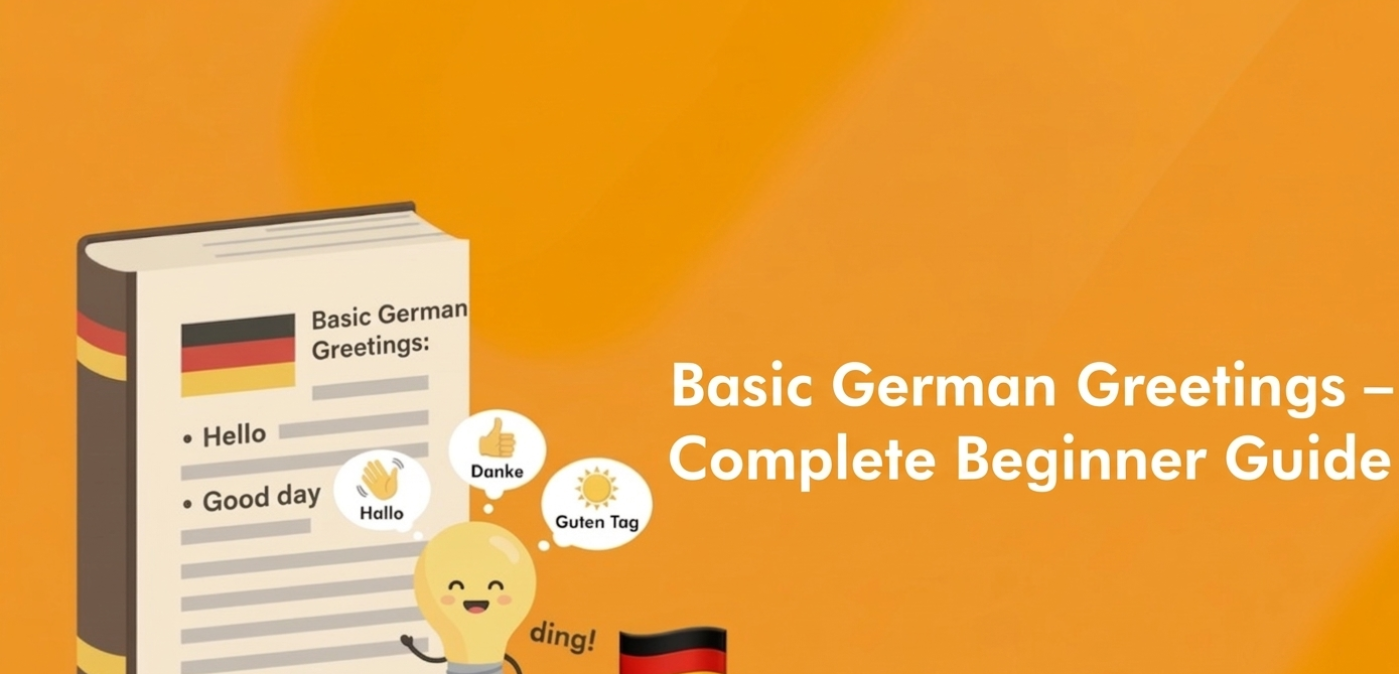
Basic German Greetings – Complete Beginner Guide (A1 Level)
Learning basic German greetings is the first step in speaking German confidently. Greetings are used in daily conversations, introductions, classrooms, workplaces, and travel situations. In this guide, you will learn the most common German greetings, their meanings, pronunciation tips, and when to use formal and informal expressions.
This lesson is perfect for beginners (A1 level) who want to start speaking German in real-life situations.
Why German Greetings Are Important
Greetings help you:
- Start conversations politely
- Make a good first impression
- Speak naturally with native speakers
- Understand daily German communication
In German, greetings change depending on:
- Time of day
- Formal or informal situation
- Region in Germany / Austria / Switzerland
Common German Greetings List
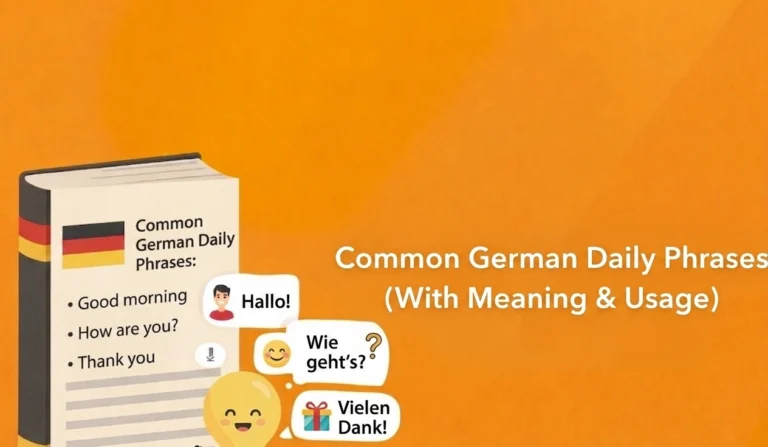
Hallo — Hello
- Meaning: Hello
- Usage: Informal / neutral
- Used with friends, classmates, colleagues
Example
Hallo! Wie geht es dir?
Hello! How are you?
Guten Morgen — Good Morning
- Used in the morning (until ~10 AM)
- Formal and informal
Example
Guten Morgen, Herr Müller.
Guten Tag — Good Day / Hello
- Used during the day
- Formal greeting
- Common in offices, schools, shops
Example
Guten Tag! Wie kann ich Ihnen helfen?
Guten Abend — Good Evening
- Used in the evening
Example
Guten Abend! Willkommen.
Gute Nacht — Good Night
- Used before going to sleep
- Not used for greeting
Example
Gute Nacht! Schlaf gut.
Informal German Greetings
Used with friends, family, young people.
Hi — Hi
Very common informal greeting.
Hey — Hey
Used with close friends.
Hallo zusammen — Hello everyone
Servus — Hi / Bye (Southern Germany / Austria)
Moin — Hello (Northern Germany, any time of day)
Formal vs Informal Greetings in German
German language has two forms:
| Situation | Use |
|---|---|
| Friends / family | Informal |
| Teacher / boss | Formal |
| Stranger | Formal |
| Office / interview | Formal |
Formal greetings:
- Guten Tag
- Guten Morgen
- Guten Abend
Informal greetings:
- Hallo
- Hi
- Hey
- Moin
Greeting + Asking How Someone Is
After greeting, Germans often ask how you are.
Wie geht es dir?
How are you? (informal)
Wie geht es Ihnen?
How are you? (formal)
Alles gut?
Everything good?
Wie läuft’s?
How’s it going?
Example conversation
Hallo!
Hallo! Wie geht es dir?
Mir geht es gut, danke.
Greeting + Introduction
You can combine greeting + introduction.
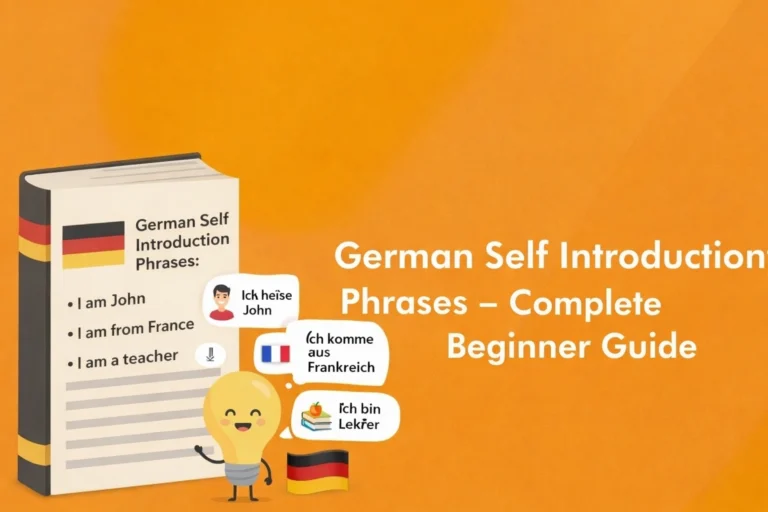
Hallo, ich heiße Rahul.
Hello, my name is Rahul.
Guten Tag, ich bin Anna.
Good day, I am Anna.
Hallo, ich komme aus Indien.
Hello, I come from India.
Regional German Greetings
Different parts of German-speaking countries use different greetings.
| Greeting | Region |
|---|---|
| Moin | North Germany |
| Servus | Austria / Bavaria |
| Grüß Gott | South Germany / Austria |
| Grüezi | Switzerland |
Example
Grüß Gott! (formal greeting in Bavaria)
Tips to Learn German Greetings Fast
- Practice daily speaking
- Listen to German audio
- Use greetings in real life
- Repeat aloud
- Learn with conversations
Good practice:
Hallo
Guten Tag
Wie geht es dir
Danke
Tschüss
Common Goodbye Phrases
| German | English |
|---|---|
| Tschüss | Bye |
| Auf Wiedersehen | Goodbye (formal) |
| Bis bald | See you soon |
| Bis später | See you later |
| Gute Nacht | Good night |
Example
Tschüss! Bis bald.
Conclusion
Basic German greetings are the foundation of communication in German. Once you learn greetings like Hallo, Guten Tag, Guten Morgen, and Wie geht es dir, you can start real conversations with confidence. Practice these greetings every day to improve your speaking skills quickly.
Learning greetings is the first step to mastering the German language.